
Written by VERIFIED Crypto Checkout | Payments Infrastructure Operator
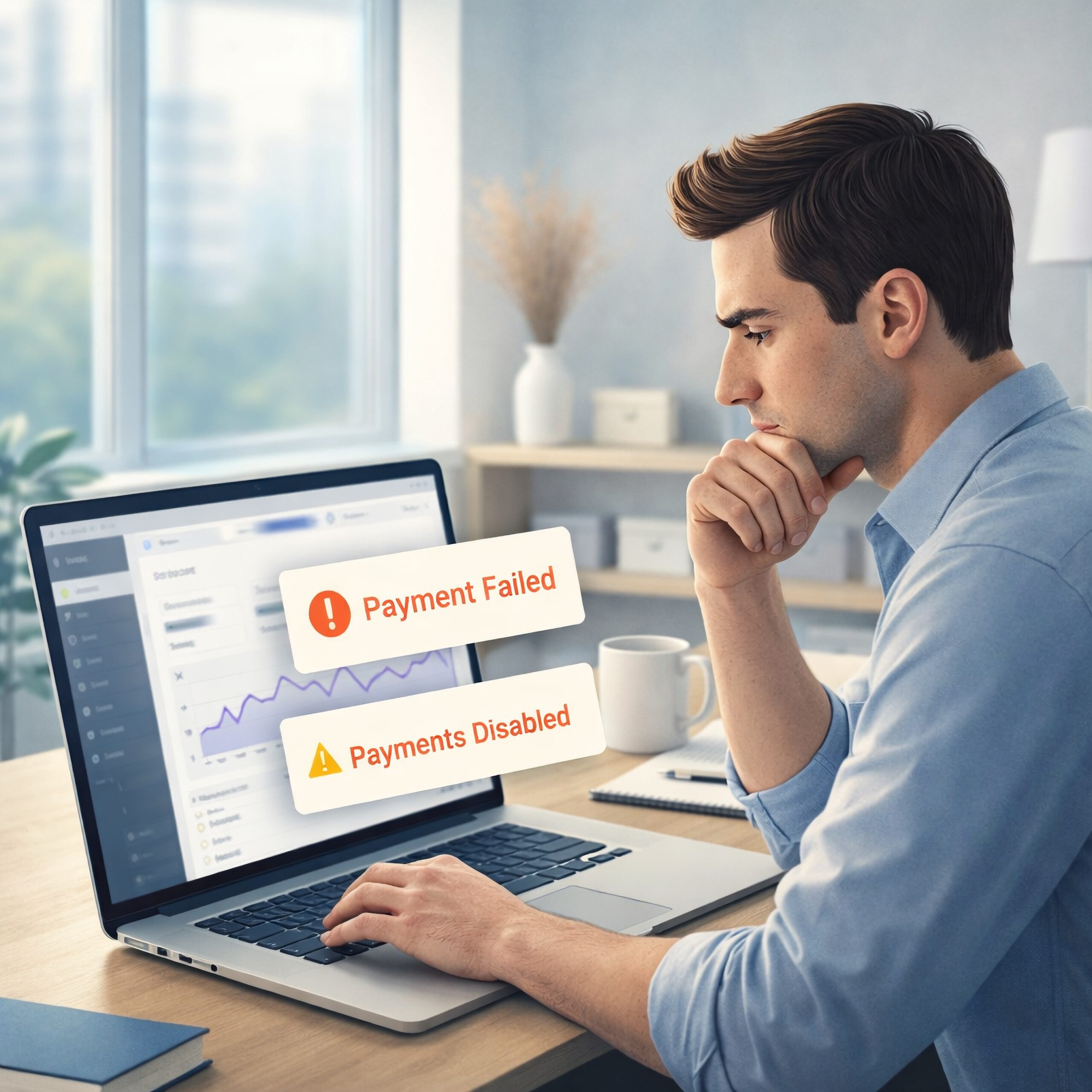
If your payment processor shut down your account, the impact is immediate: checkout stops, transactions fail, and cash flow is interrupted. This can happen without warning, and in many cases, funds are temporarily held while the processor reviews risk exposure. The priority is not understanding why — it is restoring your ability to accept payments as quickly as possible.
Direct Answer: What to Do Immediately
- Implement a backup payment method to restore checkout
- Send payment links to recover pending or failed orders
- Notify customers if checkout is disrupted
- Assess whether re-approval or alternative routing is viable
A payment processor shutdown occurs when a provider disables a merchant’s ability to accept payments due to risk, compliance, or policy triggers. This typically results in immediate checkout disruption and potential delays in accessing funds.
In this article, crypto checkout refers to a routing-based payment model where customers can still pay with traditional cards through external providers, while merchant settlement occurs in digital assets such as USDC. It does not mean customers must already hold cryptocurrency.
How It Works: What Happens During a Shutdown
- Risk Trigger Detected
Unusual activity such as chargebacks, volume spikes, policy flags, or category-based scrutiny is detected by the processor’s risk systems. - Account Limited
Payouts may pause, transaction volume may be restricted, or processing functionality may be partially disabled. - Processing Disabled
Checkout fails and new transactions cannot be accepted. - Funds Held
Existing funds may be held for review, reserve coverage, or dispute exposure. - Merchant Must Replace Checkout
Recovery depends on implementing an alternative payment path quickly enough to preserve revenue continuity.
Why Payment Processors Shut Down Accounts
High Chargebacks
Card networks and processors monitor dispute ratios closely. Elevated chargebacks are one of the fastest ways to move from review status into restriction or termination.
Product Category Risk
Certain industries carry higher regulatory, reputational, or compliance exposure. Even when sales are legitimate, processor appetite may change faster than the merchant’s business model changes.
Sudden Volume Spikes
Rapid growth can look similar to fraud, account takeover, or short-lived merchant behavior. A volume increase that feels positive to the merchant can look unstable to the processor.
Policy Violations
If the processor determines that products, claims, fulfillment patterns, or business practices fall outside its policies, shutdown risk increases immediately.
Risk Model Triggers
Most shutdowns are not personal decisions. They are automated outcomes produced by internal risk models.
See official policy and network resources:
- Stripe Acceptable Use Policy
- PayPal Acceptable Use Policy
- Shopify Payments Terms
- Mastercard MATCH Overview
- Visa Dispute Monitoring Program
Operator insight: Based on patterns observed across dozens of underwriting-constrained ecommerce merchants, shutdowns are most commonly triggered by a combination of elevated chargeback ratios and sudden volume changes. Either factor can create pressure independently, but together they significantly increase shutdown probability.
The Real Problem: Single Processor Dependency
The shutdown itself is only part of the problem. The larger issue is that most ecommerce merchants rely on one processor, one approval path, and one checkout dependency.
- Centralized risk exposure
- No fallback system
- Full dependency on ongoing underwriting tolerance
Settlement architecture determines risk exposure. If checkout depends on one approval, revenue depends on one decision.
What to Do If Stripe Shuts Down Your Account
If Stripe shuts down your account, the operational problem is usually immediate: processing stops, appeals move slower than the business needs, and the explanation may remain broad rather than specific.
- Processing may stop immediately
- Funds may be held on a reserve basis, often in the 120–180 day range depending on risk exposure
- Communication may reference policy categories without giving merchants a precise remediation path
- Appeals may exist, but they are rarely a same-day continuity solution
Operator insight: Stripe shutdowns tend to be fast and operationally final. Merchants should treat them as continuity events first and review events second.
PayPal Account Limited: What Are Your Options?
When PayPal limits an account, the experience is often different from a hard processor termination. Some merchants face partial restrictions first, while others lose functional access more broadly.
- Funds may be held for up to 180 days under PayPal’s risk policies
- Checkout functionality may be partially or fully restricted
- Resolution timelines can vary depending on the nature of the review
Operator insight: PayPal limitations can sometimes feel less final than Stripe shutdowns, but they still create the same business problem: uncertainty around access to funds and ongoing checkout reliability.
How to Accept Payments After an Account Shutdown
There are several realistic paths forward after a shutdown.
| Option | Typical Speed | Main Tradeoff | Best Use Case |
|---|---|---|---|
| Reapply with another processor | Slow to uncertain | Approval may fail or take time | Merchants who still fit mainstream underwriting |
| High-risk merchant account | Moderate | Higher fees, reserves, stricter monitoring | Merchants who can still qualify through specialized underwriting |
| Routing-based crypto checkout | Fastest continuity path | Provider-dependent flow and KYC still apply | Merchants who need checkout continuity when direct underwriting is unstable |
1. Reapply with Another Processor
This works when the shutdown was isolated and your category still fits another processor’s risk tolerance. The downside is timing. Reapproval can take longer than your cash flow can tolerate.
2. High-Risk Merchant Accounts
Specialized providers and brokers may still be able to place merchants into underwritten processing programs. Depending on fit, merchants may look at firms such as Durango Merchant Services, Host Merchant Services, Payline, or similar underwriting-focused providers.
For merchants who want help evaluating that route, see high-risk merchant account underwriting options.
3. Routing-Based Checkout Infrastructure
This is the continuity path for merchants who cannot afford to wait for underwriting decisions or who need a second payment rail while traditional options are being explored.
Important: MATCH List Impact
The MATCH (Member Alert to Control High-Risk Merchants) list is maintained at the card-network level and used by acquiring banks during underwriting review.
- Listings can remain for up to 5 years
- Approval becomes harder
- Reserve requirements and pricing pressure often increase
Being placed on MATCH does not make future processing impossible, but it narrows options and usually makes speed harder to achieve.
How Crypto Checkout Solves This
Crypto checkout changes where payment acceptance risk is concentrated.
Instead of depending on one direct merchant account:
- Customers are routed to external on-ramp providers
- Those providers handle card acceptance and compliance within their own flow
- Settlement is delivered to the merchant in USDC
- Multiple providers can be used instead of relying on one processor relationship
This is why crypto checkout works as a continuity layer. It is a routing architecture designed to keep checkout operating when direct processing becomes unstable.
See the broader crypto checkout infrastructure. Get the VERIFIED Crypto Checkout plugin here.
Alternatives to Stripe for High-Risk Ecommerce
Merchants searching for an alternative to Stripe for high-risk ecommerce usually need one of three things:
- A different underwritten processor willing to review the business
- A specialized billing or checkout platform for certain models
- A routing-based checkout system that reduces direct processor dependency
Examples across these categories include providers such as PayKickstart for subscription-focused billing models, Payline or Host Merchant Services for underwritten processing, and routing-based systems like crypto checkout infrastructure.
The right question is not simply “what is another Stripe?” The right question is “what payment architecture gives this business the highest odds of staying live?”
Where Subscriptions Fit
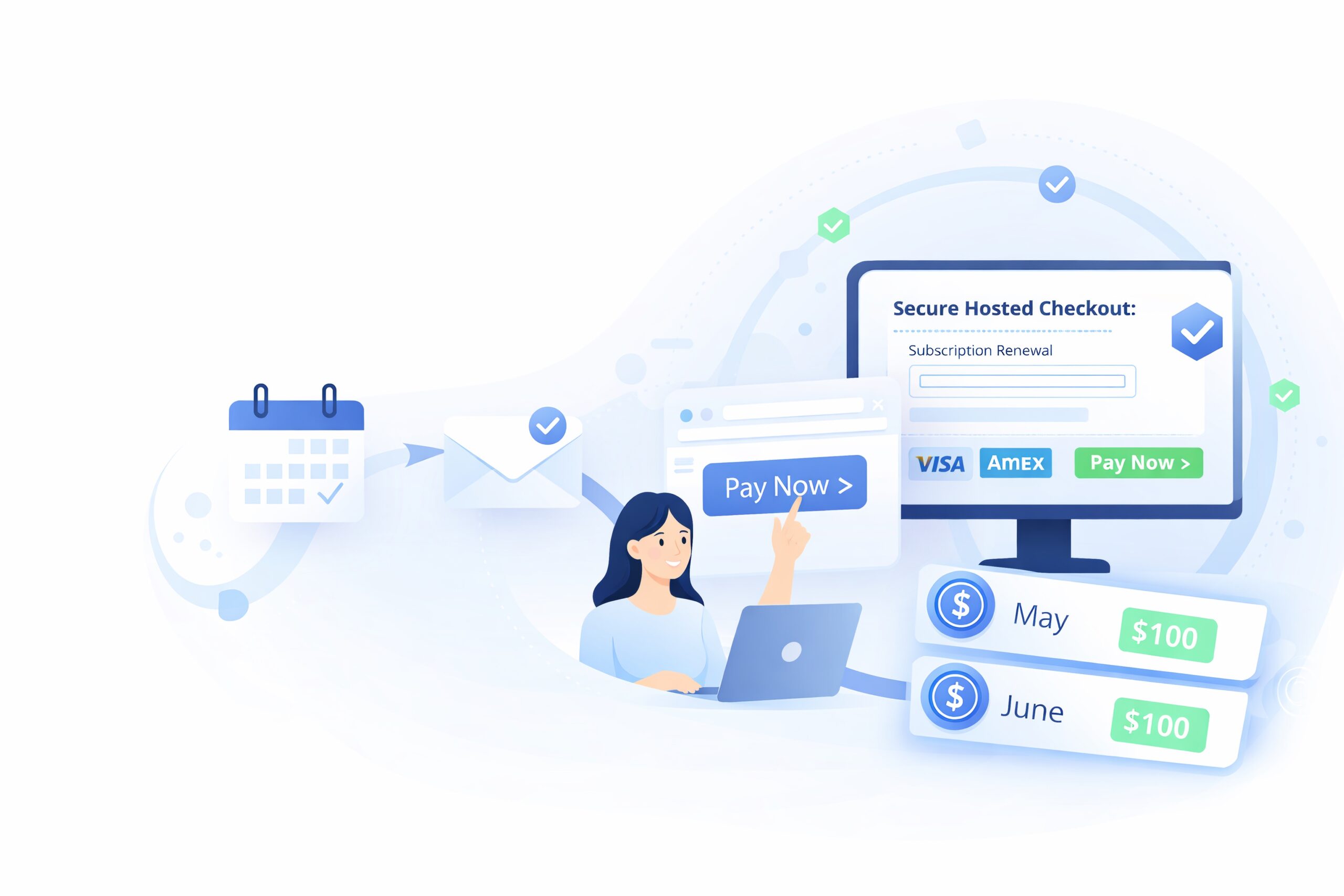
Subscriptions are usually among the first revenue streams to break after a processor shutdown because stored card billing depends on the original processor relationship remaining active.
With routing-based infrastructure:
- Renewals can be handled through payment links instead of stored cards
- No dependency on the original processor remains
- Revenue continuity improves even if traditional recurring billing fails
Learn more about subscription payments without chargebacks.
Where Payment Links Fit
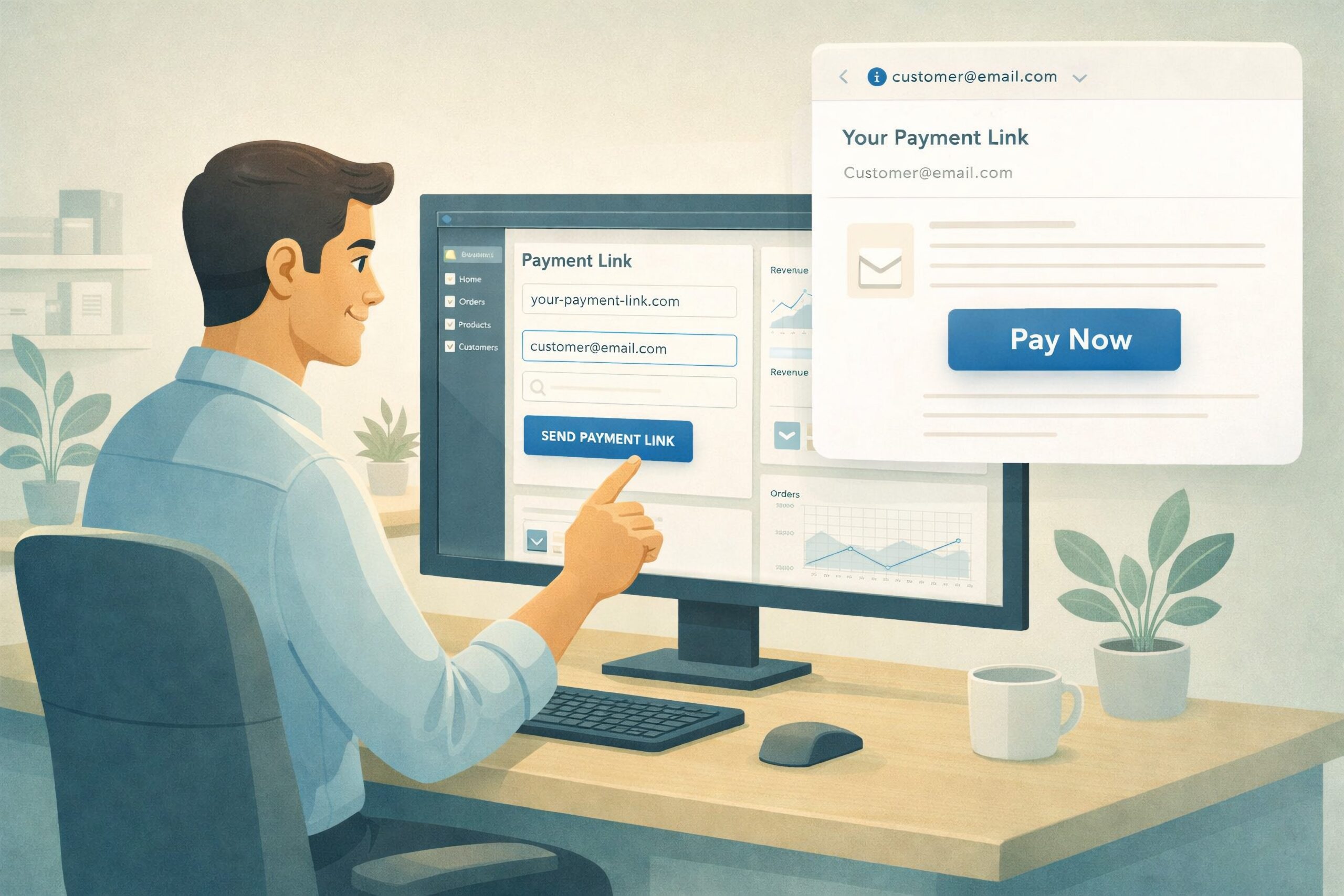
Payment links are the fastest tactical recovery tool after a shutdown.
- Send direct payment URLs to customers
- Recover pending, failed, or manually created orders
- Keep sales moving even when the original checkout path is offline
See how to send payment links for orders and all other features of the plugin.
When This Model Makes Sense
- You operate in underwriting-sensitive categories
- You have experienced processor instability or shutdown risk
- You need redundancy in checkout architecture
- You cannot afford to depend on one processor relationship
When It May Not
- You operate in low-risk categories such as standard retail or low-dispute SaaS
- You have stable, long-term processing relationships
- You prefer a single-provider setup without redundancy needs
System Positioning
VERIFIED Crypto Checkout is a crypto checkout infrastructure layer for WooCommerce.
- It routes payments through external providers
- It separates checkout continuity from a single processor relationship
- It acts as a fallback when direct underwriting becomes unstable
This connects to the broader concept of accepting payments without a merchant account.
Next Step
If your payment processor shut down your account, the first goal is to restore checkout. The second goal is to build a payment stack that is less fragile than the one that failed.
If standard or high-risk underwriting is still viable, that path may make sense. If it is delayed or constrained, crypto checkout provides a continuity layer that keeps payment acceptance moving while those options are evaluated.
Understanding crypto checkout and payment routing is how merchants move from processor dependency toward payment resilience.
Frequently Asked Questions
What should I do if Stripe shuts down my account?
You should immediately restore an alternative payment path, notify customers if checkout is disrupted, and recover pending orders through payment links or another payment flow. Treat it as a continuity event first, not just an appeal process.
How long do payment processors hold funds after shutdown?
Hold periods commonly fall in the 90–180 day range but vary by processor and risk exposure.
Can you get removed from the MATCH list?
MATCH listings are difficult to remove and usually require the listing bank to correct or update the record. Removal is possible in some cases, but merchants should not rely on fast reversal.
What is the best alternative to Stripe for high-risk ecommerce?
There is no single universal replacement. Some merchants fit another underwritten processor, some fit specialized billing platforms, and others need a routing-based checkout model that reduces dependency on direct processor approval.
About the Author: Brad Ungar
